


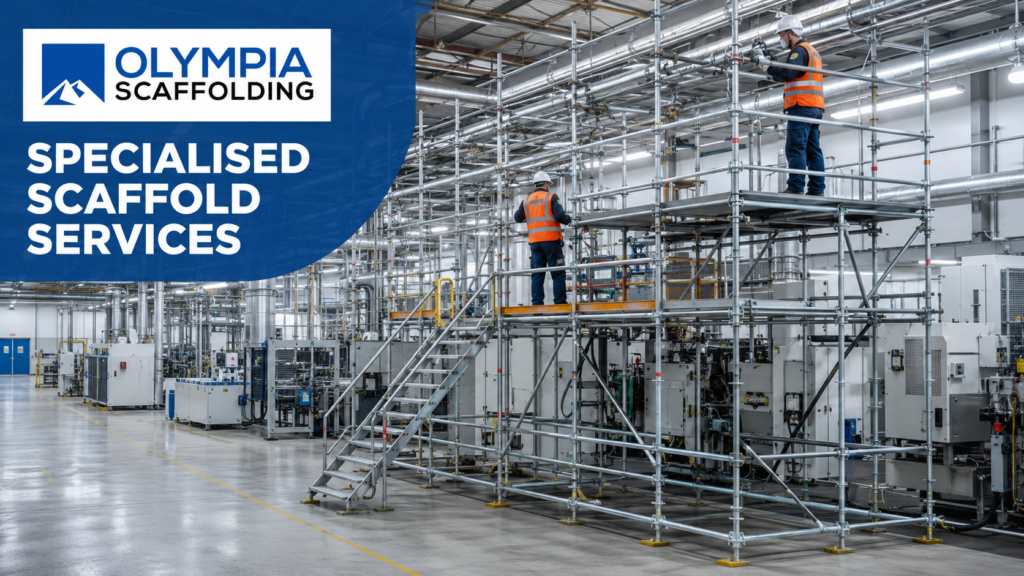
Scaffolding is often associated with building exteriors, roofing and construction sites. However, many industrial, commercial and production environments also require carefully designed internal access solutions. Factories, warehouses, studios, workshops and processing facilities frequently contain machinery, restricted spaces and high-level structures that cannot be accessed safely using standard ladders or mobile platforms.
Internal production scaffolding provides a stable working platform for maintenance, installation, inspection and refurbishment tasks. Because every working environment presents different challenges, the scaffolding must be planned around the building, equipment, workforce and operational requirements.
Olympia Scaffolding provides specialised scaffold services across Basingstoke, Guildford, Greater London and surrounding areas within approximately 60 miles of Basingstoke. Our experienced team delivers reliable access solutions with a strong emphasis on safety, careful planning and minimal disruption.
What Is Internal Production Scaffolding?
Internal production scaffolding is a temporary access structure installed inside a commercial, industrial or production facility. It allows contractors and maintenance teams to work safely at height while providing suitable access to ceilings, lighting, ventilation systems, machinery and structural components.
Unlike straightforward external scaffolding, internal structures may need to fit around fixed equipment, production lines, shelving, pipework or sensitive materials. Access routes and emergency exits must remain clear, while the scaffold must provide a practical platform for the intended work.
Internal scaffolding may be required in:
- Factories and manufacturing facilities
- Warehouses and distribution centres
- Film and television studios
- Theatres and entertainment venues
- Shopping centres and retail units
- Schools and public buildings
- Workshops and engineering facilities
- Food production environments
- Offices and commercial premises
- Sports halls and leisure centres
A site-specific assessment helps determine the safest and most efficient scaffold design for each location.
Why Is Specialist Planning Important?
Production environments can be complex. A poorly positioned scaffold may obstruct machinery, interrupt access routes or prevent employees from completing their normal duties. It may also place unnecessary loads on unsuitable floors or create risks around electrical equipment and moving vehicles.
Before installation begins, the scaffolding contractor should understand the work being completed, the areas requiring access and the conditions within the building. Important factors include:
- Available floor space
- Floor condition and load-bearing capacity
- Required platform height
- Machinery and production line locations
- Pedestrian and vehicle movements
- Emergency exits and escape routes
- Overhead services and obstructions
- Access for materials and equipment
- Working hours and production schedules
- Dust, hygiene or contamination controls
Careful planning allows the scaffold to support the project while reducing interference with the wider workplace.
Common Uses for Internal Scaffolding
Specialised scaffolding can support a wide range of maintenance, installation and improvement projects.
Ceiling and Roof-Level Work
Large commercial and industrial buildings often have high ceilings that are difficult to access. Internal scaffolding can provide a secure platform for repairing ceilings, inspecting roof structures, installing insulation or completing decoration.
Lighting and Electrical Installations
Factories, warehouses and studios may contain lighting systems positioned several metres above floor level. Scaffold platforms allow qualified contractors to replace fittings, install new systems, inspect electrical components and access cable routes more safely.
Ventilation and Mechanical Services
Ductwork, extraction systems, heating equipment and other mechanical services are frequently located at height. A purpose-built scaffold can provide access for installation, cleaning, inspection and repair work.
Machinery Maintenance and Installation
Some industrial machines are too large or complex to access from the floor. Scaffolding can be configured around equipment to provide working platforms at the required levels. This may support engineering, inspection or component replacement tasks.
Painting and Refurbishment
Internal decoration in large buildings may require access across extensive wall and ceiling areas. Scaffolding provides stable platforms for painters, plasterers and refurbishment teams while helping them keep tools and materials within reach.
Film, Theatre and Event Production
Studios and performance venues may require temporary scaffold structures for lighting, scenery, cameras, sound equipment or production access. These projects often involve unusual layouts and strict deadlines, making specialist planning essential.
Scaffolding Around Active Production Areas
Closing an entire workplace may not always be practical. In some cases, scaffold installation and project work must be completed while other parts of the facility remain operational.
This requires close coordination between the scaffolding contractor, site management and the trades using the platform. Work may be divided into phases so that specific areas can be isolated without stopping the complete operation.
Installation can sometimes be scheduled outside normal production hours, during planned shutdowns or at weekends. Barriers, signs and controlled access points may also be used to separate scaffold activities from employees, visitors and vehicles.
The arrangements will depend on the site and its risk assessment. Safety should always take priority over speed or convenience.
Protecting Machinery, Floors and Finished Surfaces
Internal scaffolding must be installed with care because commercial facilities may contain valuable equipment, specialist flooring or completed finishes.
Suitable protection may be needed beneath and around the structure. The specific measures will depend on the floor surface, scaffold loading and surrounding equipment. Sensitive machinery may also need to be covered or isolated to protect it from dust and accidental damage.
Scaffold components should be transported through the building carefully, particularly where access is narrow or production equipment remains in position. A planned route can reduce unnecessary handling and help protect walls, doors and other surfaces.
Scaffold Design and Stability
Every scaffold must be suitable for its intended purpose. The height, length, platform width, loading requirements and access points should all reflect the work being undertaken.
Depending on the project, an internal scaffold may include:
- Independent scaffold structures
- Birdcage scaffolding
- Access towers
- Loading platforms
- Bridging sections
- Staircase access
- Edge protection
- Debris netting or sheeting
- Protected walkways
- Bespoke structures around machinery
Birdcage scaffolding is commonly used for ceiling work because it creates a large, continuous working platform. More complex sites may require specially designed arrangements to bridge equipment or avoid obstructions.
Where necessary, the design should be supported by appropriate calculations and technical information.
Safety During Installation and Use
Scaffolding should only be erected, altered and dismantled by competent professionals. Unauthorised changes can affect the stability of the structure and create serious hazards.
Once installed, the scaffold should be inspected as required and after circumstances that may affect its safety. Users should also follow the agreed loading limits and access arrangements.
Important precautions include:
- Keeping platforms clear of unnecessary materials
- Using designated access points
- Maintaining suitable edge protection
- Preventing unauthorised scaffold alterations
- Reporting damaged or loose components
- Keeping emergency routes unobstructed
- Controlling access beneath active work areas
- Following the site’s health and safety procedures
Good communication between everyone involved helps ensure that the scaffold remains safe throughout the project.
Minimising Disruption to Your Business
Efficient scaffold services involve more than erecting a structure. The programme should consider deliveries, working hours, other contractors and the client’s operational priorities.
A detailed site survey allows potential difficulties to be identified before materials arrive. It also helps the scaffolding team plan labour, equipment and vehicle access accurately.
When several trades need to use the scaffold, their requirements should be discussed in advance. Correct platform levels and access points can reduce the need for later alterations, saving time and helping the wider project remain on schedule.
Choosing a Specialised Scaffolding Contractor
Internal production scaffolding requires experience, adaptability and attention to detail. The contractor should be able to assess complex surroundings, develop a suitable access solution and coordinate effectively with site managers and other trades.
A dependable scaffolding company should provide:
- A clear site assessment
- A scaffold suited to the work
- Competent installation and dismantling
- Appropriate inspections
- Reliable project scheduling
- Clear communication
- A strong safety-focused approach
- Transparent quotations
The lowest quotation may not always provide the best overall value. Suitability, safety, reliability and the ability to meet the project programme should also influence the decision.
Arrange Specialised Scaffold Services
Internal production scaffolding provides secure, practical access for maintenance, installation and refurbishment work in challenging commercial environments. With suitable planning, it can support essential work while helping businesses limit disruption and maintain safe movement throughout the premises.
Olympia Scaffolding delivers specialised scaffold services throughout Basingstoke, Guildford, Greater London and surrounding locations, including Berkshire, Hampshire, Oxfordshire and Surrey. Our experienced team has supported numerous regional projects and understands the demands of complex internal working environments.
We provide complimentary quotations and site surveys to help clients identify an appropriate access solution. Contact Olympia Scaffolding today to discuss your internal production scaffolding requirements and arrange a professional assessment.

